I Never Planned to Be a Nurse
If you'd asked me at seventeen what I wanted to do with my life, nursing wouldn't have even made the list.
If you'd asked me at seventeen what I wanted to do with my life, nursing wouldn't have even made the list.
It wasn't a childhood dream. I didn't grow up telling people I wanted to work in hospitals or wear scrubs. I wasn't inspired by medical TV shows or fascinated by anatomy. In fact, when I finished school, I had absolutely no idea what I wanted to do.
Like a lot of people leaving high school, I felt a little lost.
What I did know was that I loved the outdoors.
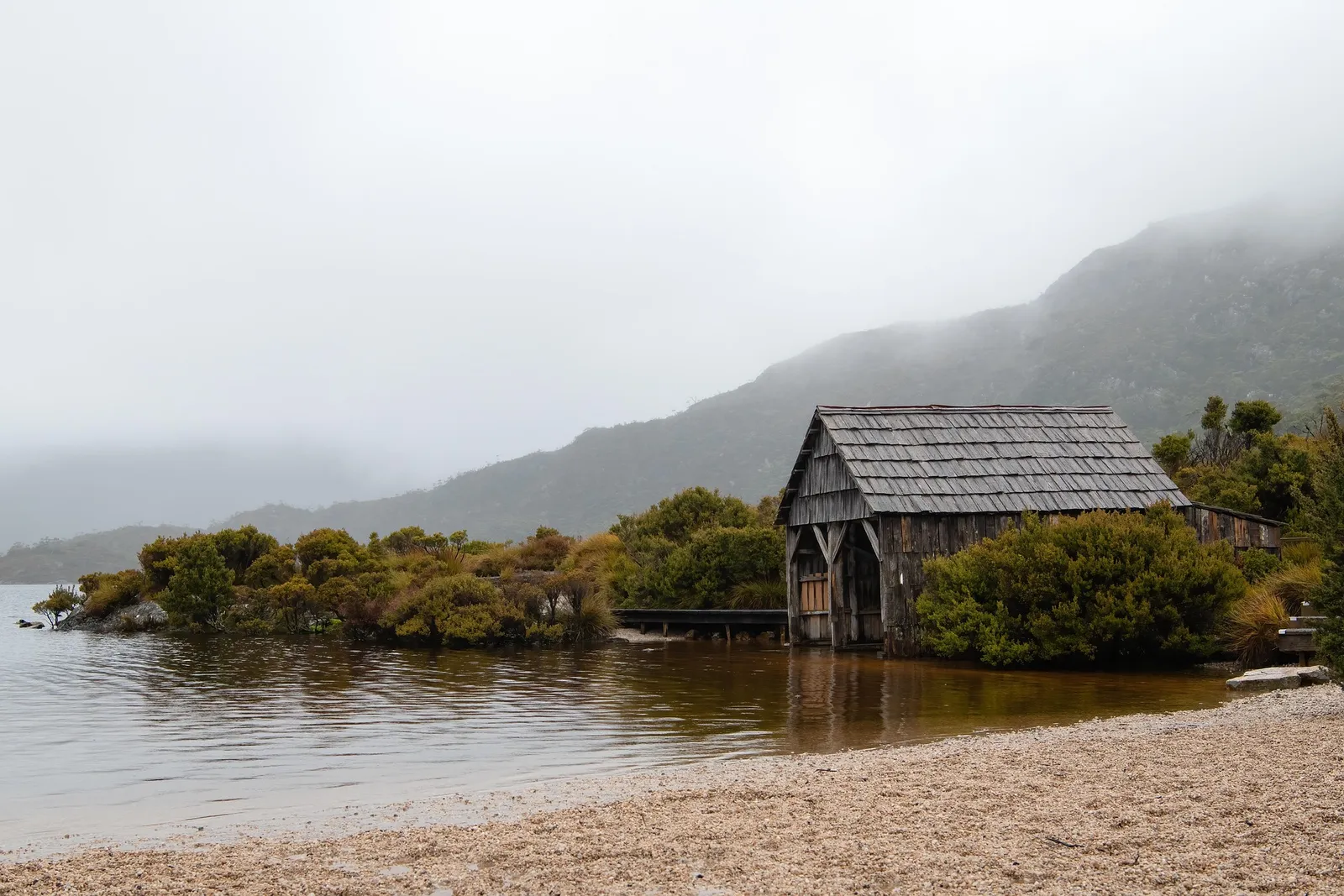
So instead of heading straight to university, I found myself working as a guide in Tasmania's wilderness. Looking back now, it seems like an unusual first step towards emergency nursing, but I honestly think that's where my nursing career really began.
The Tasmanian wilderness has a way of teaching you things about yourself.
The weather changes without warning. Plans rarely survive the day unchanged. You learn to solve problems with what you have, stay calm when things don't go as expected, and make decisions that matter.
Most importantly, you're responsible for other people.
On paper, I was there to guide groups through some of the most beautiful landscapes in Australia. In reality, every trip involved constantly assessing people.
Who was struggling?
Who was getting dehydrated?
Who wasn't saying they were tired because they didn't want to hold the group back?
Who needed encouragement rather than instructions?
Every day involved reading people, adapting plans, and balancing safety with the experience they had come for.
I loved it, I loved the mountains, I loved the ever-changing environment.
But more than anything, I loved working with people.
There was something incredibly rewarding about helping complete strangers navigate challenges they never expected they'd face.
Sometimes those challenges weren't just physical.
Being days away from civilisation has a way of exposing people's vulnerabilities. You see confidence disappear. You see fear. You see resilience. You see people discover they're capable of far more than they ever believed.
I learned very quickly that looking after people wasn't just about practical skills.
It was about trust.
Then one day, that responsibility became very real.
Like anyone working in remote environments, we occasionally dealt with illness and injury. Nothing prepares you for the first time someone genuinely needs your help when there isn't an ambulance ten minutes away.
Out there, there isn't a hospital around the corner.
There isn't a rapid response team coming to an emergency buzzer.
There isn't a doctor to hand the problem over to.
For that moment, you're it.
I still remember the feeling, It wasnt panic, it was responsiblity.
The responsibility of keeping someone safe, making good decisions, and getting them through until more help could arrive.
That experience planted a seed inside me that I didn't recognise at the time.
It made me realise I enjoyed working under pressure, where calmness can help overcome diversity.
Not because it was exciting, but because it demanded complete focus.
Everything else disappears.
The only thing that matters is the person in front of you.
I've always had a bit of an adrenaline-seeking personality, I guess thats why I drifted to guiding and the outdoors.
So naturally my thoughts drifted towards becoming a paramedic, it seemed like a perfect combination of responsiblity and remotness and a viable long term career goal.
At that stage, though, the pathway into paramedicine wasn't nearly as straightforward as it is today, there was no univserity but a direct entry that was hard to come by.
Nursing seemed like the logical stepping stone at the time.
It would teach me clinical skills, expose me to healthcare, and eventually help me work towards becoming a paramedic.
At least, that was the plan.
Then fate intervened.
My very first clinical placement as a student nurse happened to be in an emergency department.
Completely by chance.
Looking back now, it's amazing how one day can quietly change the direction of your entire life.
I walked into the department expecting it to simply be another placement.
Instead, I found where I belonged.
Emergency departments are difficult to explain to people who've never worked in one.
They're loudn busy and chaotic
Sometimes heartbreaking.
Sometimes hilarious.
Sometimes all of those things within the same hour.
But underneath what looks like chaos is something incredibly organised.
A team...
Everyone moving towards the same goal.
Everyone relying on each other.
Everyone bringing different strengths.
I'd never experienced anything quite like it.
The teamwork was addictive.
It wasn't about individual achievements.
Nobody succeeds alone in emergency nursing.
The patient outcomes belong to the team.
That resonated with everything I'd loved about guiding.
Different environment.
Different uniforms.
Same shared purpose.
Then there were the patients.
Every cubicle held someone with a completely different story.
Some having the best day of their lives just moments ago.
Some experiencing the worst day imaginable.
Within minutes of meeting someone, you needed to build trust with someone who had never met you before.
I've always found that fascinating.
Human connection doesn't always require time.
Sometimes it requires presence.
Sometimes it requires listening.
Sometimes it's simply sitting with someone while they're scared.
Emergency nursing forces you to learn that quickly.
Every shift is an exercise in building relationships that might only last a few minutes but can leave a lifelong impact.
That suited me perfectly.
I also realised something unexpected about myself.
For years I'd considered my relaxed personality to be a weakness.
I wasn't the loudest person in the room.
I wasn't naturally assertive.
I wasn't someone who thrived on attention.
I'd always wondered whether I should be different.
Then I started nursing.
Suddenly that calmness became valuable.
Patients don't always need the loudest voice.
Sometimes they need the calmest one.
Someone who doesn't add to the chaos.
Someone who can think clearly when everyone else is stressed.
Someone who can reassure without pretending everything is fine.
The personality I'd questioned for years became one of my biggest strengths.
That was an incredibly important lesson.
Healthcare needs all kinds of people.
There isn't one personality type that makes a good nurse.
There isn't one communication style.
There isn't one leadership style.
The profession is stronger because we're different.
Within just a few days of that first placement, something shifted inside me.
The plan to become a paramedic quietly disappeared.
Not because I stopped respecting paramedics.
Far from it.
They're extraordinary clinicians.
But I realised I'd found something that suited me even better.
I wanted to be a nurse.
People often ask nurses why they chose the profession.
The expected answer is usually something like, "I just wanted to help people."
Of course I want to help people.
Most people do.
That's part of being human.
But it isn't the reason I stayed.
The thing that captured me was something much harder to explain.
I love how quickly nursing forces genuine human connection.
I love that no two conversations are ever the same.
I love that every patient teaches you something.
I love the teamwork.
I love adapting when plans change.
I love solving problems with limited information.
I love that every day looks different from the one before.
Some people find that unpredictability exhausting.
I find it energising.
Has nursing been harder than I imagined?
Absolutely.
There have been shifts that challenged every bit of confidence I had.
Patients I'll never forget.
Mistakes I've learned from.
Conversations that still stay with me years later.
Moments of incredible sadness.
Moments of extraordinary joy.
Nursing has a way of humbling you.
The more experience you gain, the more you realise there is still to learn.
After all these years, I still feel that.
And honestly, I hope I always do.
Because the day you think you've mastered nursing is probably the day you stop growing.
Looking back, it's funny how disconnected the journey seems on paper.
A teenager with no plan.
A wilderness guide.
A future paramedic.
A student nurse.
An emergency nurse.
Each step felt random at the time.
Now they seem connected.
Guiding taught me to stay calm.
The wilderness taught me to adapt.
Looking after injured walkers taught me responsibility.
Emergency nursing gave all of those lessons a home.
If you'd told that lost teenager finishing school that he'd eventually spend his career in emergency departments, work in leadership, contribute to clinical governance, build tools for nurses, and spend his time trying to improve the profession for others, I wouldn't have believed you.
But that's the funny thing about careers.
Sometimes they aren't discovered through careful planning.
Sometimes you simply keep following the things that make you feel alive.
For me, that first emergency department placement changed everything.
I walked in thinking nursing was simply a pathway to somewhere else.
I walked out knowing I'd already arrived.
More than eighteen years later, nursing continues to challenge me, surprise me, frustrate me, inspire me and teach me.
It has given me friendships I'll have for life.
It has introduced me to remarkable patients whose stories I'll never forget.
It has shown me what people are capable of during the hardest moments of their lives.
Most of all, it has shown me that sometimes the best decisions are the ones you never intended to make.
I never planned to become a nurse.
Looking back now, I can't imagine becoming anything else.
This post is a reflective practice piece, not a clinical record. Scenarios described are de-identified and composite—details have been blended and adapted from experiences across a nursing career so that no real patient, colleague, or workplace can be identified.
Want to go deeper on reflective practice? Read the full guide →